Home › Commercial Asphalt Resurfacing & Overlays
Refresh your property with commercial asphalt resurfacing in Greensboro, NC. Overlays restore worn but structurally sound parking lots for a fraction of full replacement cost. We repair weak areas, mill transitions, and apply an even overlay course. Arrange a pavement assessment to see if your lot qualifies for an asphalt overlay solution.
Prestige Asphalt Greensboro provides professional commercial asphalt resurfacing throughout Greensboro, NC and the surrounding area. Our licensed, insured crew delivers safe, clean, on-time work with a free estimate before anything begins. Call (336) 962-7435 or request your free quote.
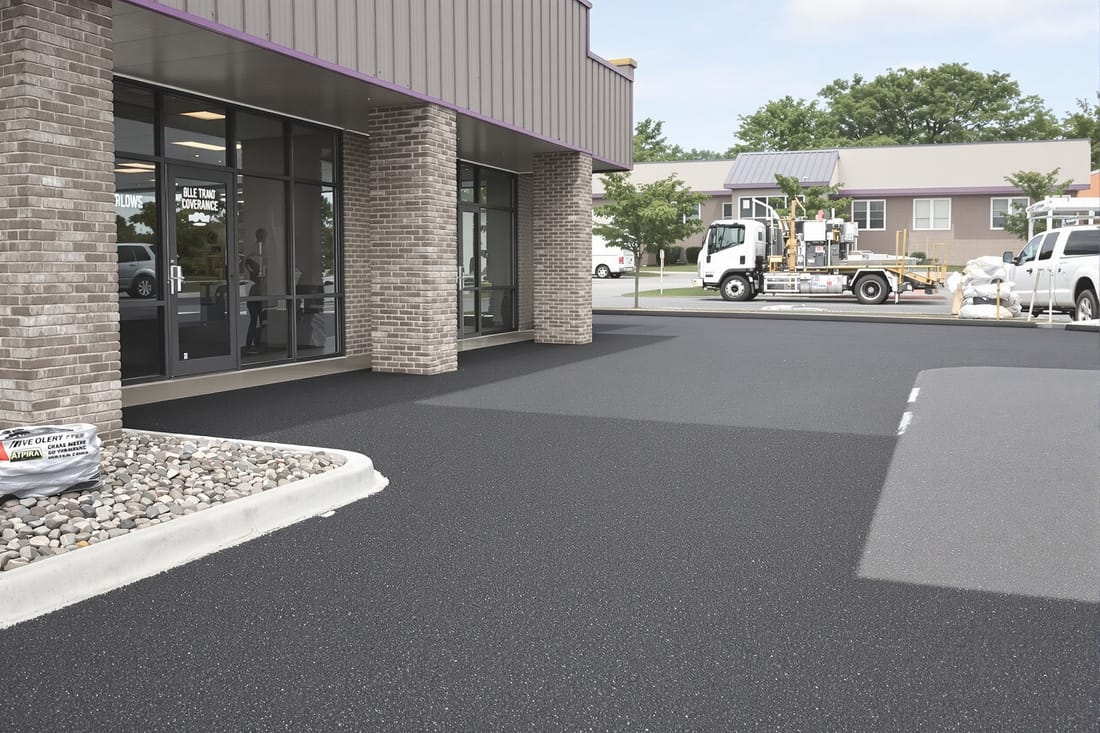
Commercial Asphalt Resurfacing in Greensboro, Done the Right Way
If your parking lot or private roadway is starting to ravel, crack, or look tired but the base is still solid, commercial asphalt resurfacing is usually the smartest way to bring it back to life without paying for a full tear out. Prestige Asphalt Greensboro focuses on resurfacing and overlays for shopping centers, office parks, churches, apartments, and industrial sites all across the Triad.
Resurfacing means we install a new layer of hot mix asphalt on top of your existing pavement after it is repaired and prepared. For most Greensboro commercial properties, that new surface is 1.5 to 2 inches thick, compacted, which is enough to restore a smooth driving surface, seal out water, and boost curb appeal. If your lot has buses, heavy trucks, or frequent deliveries we may recommend thicker lifts or a stronger mix design.
The key difference between a long lasting overlay and a short lived one is inspection and prep work. Before we ever bring a paver on site, we walk the pavement with you, mark structural failures, drainage issues, and high traffic wear areas, then build a resurfacing plan that fits your use, budget, and timing.
How Our Commercial Asphalt Resurfacing & Overlay Process Works
On a typical Greensboro commercial project, the crew from Prestige Asphalt Greensboro follows a very specific sequence so your property stays accessible and your new surface lasts.
1) Evaluation and core checks: We start with a visual inspection and, when needed on larger lots or truck yards, we cut a few small core samples to confirm existing asphalt thickness and base condition. If the base is unstable or pumping water, we will recommend targeted reconstruction in those areas rather than just covering it up.
2) Milling and edge prep: In most overlays we mill around concrete gutters, drains, and tie in points so the finished surface meets existing structures at the right height. This usually involves cold planing 1 to 2 inches around catch basins, dumpster pads, entrances, and sidewalks. Milling prevents puddles at inlets and eliminates trip edges at curb ramps.
3) Full depth repair of failures: Alligator cracking, potholes, sunken areas, and utility cuts are saw cut, removed, and replaced at full depth. We install and compact new stone base if needed, then place new hot mix in lifts. This step is non negotiable, because if we simply overlay over failed spots, those cracks will quickly reflect through the new mat.
4) Cleaning and tack coating: We sweep and blow the entire surface to remove dust, vegetation, and loose aggregate. A hot or emulsified tack coat is then sprayed over the old asphalt. The tack bonds the new overlay to the old surface and is one of the most important steps for long term performance.
5) Paving and compaction: We place the new asphalt using a commercial paver for consistent grade and smoothness, then compact it using steel drum and pneumatic rollers. Rollers are selected based on temperature and mix design so we achieve proper density without pushing the mat or creating waves.
6) Joints, transitions, and cleanup: We seal hand worked joints, fine tune transitions at building entrances and ADA ramps, then sweep, haul off grindings and debris, and prepare the surface for new striping. By the time we leave, your site is ready for layout and paint, typically within 24 hours, weather permitting.
What Affects Cost on a Greensboro Commercial Asphalt Resurfacing Project
Two properties that look similar from the street can have very different resurfacing costs, and we find that owners in Greensboro appreciate understanding exactly what drives the numbers.
Existing condition: If your lot has mostly surface wear, light linear cracking, and some raveling, cost will primarily be the overlay thickness and area. If there are widespread alligator cracks or deep depressions, we will need more full depth repairs and base work, which adds labor, materials, and time.
Traffic and loading: A small professional office with passenger cars can often use a standard NC DOT spec mix at 1.5 inch overlay. A distribution facility, church with buses, or apartment community with trash trucks turning in tight spots may need a stronger binder course, thicker overlay, or localized reinforcement in turning and loading zones. We tailor mix design and layer thickness to the way your pavement is actually used.
Drainage and layout: Lots with poor drainage, low spots, or misaligned gutters require more milling and grading to correct. Sometimes we can adjust slope slightly in the overlay, other times we need to cut and rework base in specific areas. Correcting drainage issues up front costs less than repeated patching and sealing after every Greensboro summer storm.
Access and phasing: Working around busy tenants, drive thru lanes, or 24 hour operations can increase cost because we may need to pave in stages, work nights or weekends, or provide extra traffic control. Prestige Asphalt Greensboro regularly phases projects so that at least part of your parking stays open, and we build that plan into your written proposal.
Material pricing and timing: Hot mix asphalt prices fluctuate with oil and aggregates, and weather windows affect productivity. Spring and fall in Greensboro usually give us ideal paving temperatures, so we can move faster and keep roller patterns tight, which can be more cost efficient than trying to force a project in the coldest part of winter.
Local Climate, Timing, and How To Make Your Overlay Last
Guilford County weather has its own quirks, and they matter a lot for commercial asphalt resurfacing. Our freeze thaw cycles are not as brutal as up north, but Greensboro still sees enough hard freezes and summer thunderstorms to punish weak pavements.
Scheduling the work: The best paving windows are typically March through early June and late September through early November. During these periods, daytime temperatures and nighttime lows stay within the range where hot mix compacts well and cools at a manageable rate. In peak summer, we often schedule paving earlier in the day so crews can compact the mat before the surface gets too hot and tender.
Moisture control: Our region gets sudden downpours and high humidity. We will not place an overlay on a visibly wet surface or with water trapped in underlying layers, because that moisture can turn to steam and weaken the bond. If your lot holds water after storms, we may recommend minor grading changes during the resurfacing or additional drainage structures.
Preventing reflective cracking: Even a perfectly installed overlay can develop reflective cracks if underlying movement is not managed. Where we see longer structural cracks in your existing asphalt, we may route and seal them before overlay or use reinforcing fabric or grids in selected areas. This targeted reinforcement helps slow down crack reflection and can add years to the life of the new surface.
Aftercare in Greensboro conditions: For the first week, we recommend avoiding tight turning of heavy trucks and placing dumpsters or storage containers on support pads instead of directly on fresh asphalt. Once the surface has had time to cool and harden, regular sweeping, quick patching of any isolated damage, and occasional sealcoating (as appropriate for your traffic level) will extend the overlay's life and keep it looking sharp for customers and tenants.
What To Ask Before You Hire a Commercial Asphalt Resurfacing Contractor
Resurfacing is a significant investment, and not every contractor approaches commercial work the same way. When you talk with Prestige Asphalt Greensboro or anyone else, here are a few specific questions that will tell you a lot about the quality you can expect.
Ask about evaluation methods: A good contractor should be willing to explain how they determined that resurfacing is appropriate for your lot. If nobody looked at base conditions, drainage paths, or heavy traffic zones, you may be getting a one size fits all solution that will not hold up.
Clarify scope of repairs: Your proposal should clearly list where milling, full depth patching, and base repairs will happen, along with overlay thickness. Vague language like "repair as needed" makes it hard to compare bids and can lead to surprises. We map out repair locations on a site plan so you can see exactly what you are paying for.
Confirm mix design and thickness: Make sure the written scope specifies asphalt mix type and compacted thickness for each area. Loading docks, drive lanes, and parking stalls may not all need the same design. On many Greensboro projects, we place a heavier section where trash trucks turn and a slightly lighter section in standard car parking rows to balance performance and budget.
Discuss traffic control and phasing: For commercial properties, keeping tenants and customers moving safely is just as important as the pavement itself. Ask how traffic will be routed, how many phases the work will require, whether you can keep certain entrances open, and what the daily schedule will be.
Review warranty and follow up: Finally, ask how long the contractor stands behind their work and what is covered. Prestige Asphalt Greensboro offers a written warranty for our commercial asphalt resurfacing projects and, just as important, we stay local and available if you have questions months or years down the road.