Home › Industrial and Heavy-Duty Asphalt Paving
Support heavy traffic with industrial asphalt paving in Greensboro, NC. We design and install thick, reinforced asphalt sections for truck yards, loading docks, and industrial facilities. Proper base depth, mix design, and compaction protect against rutting and failure. Contact us to engineer a heavy duty asphalt solution for your site.
Prestige Asphalt Greensboro provides professional industrial asphalt paving throughout Greensboro, NC and the surrounding area. Our licensed, insured crew delivers safe, clean, on-time work with a free estimate before anything begins. Call (336) 962-7435 or request your free quote.
Industrial Asphalt Paving for Greensboro Facilities
Industrial asphalt paving is not the same as paving a small parking lot. At Prestige Asphalt Greensboro, we design and build pavements that can handle loaded tractor trailers, forklifts, stacked pallets, and constant turning movements without rutting or breaking apart. If you manage a plant, distribution center, trucking yard, or manufacturing facility anywhere in the Greensboro area, our goal is to match the pavement design to the actual loads on your site.
We start by asking how your site is used. Where do trucks queue or turn sharply. Where do forklifts cross the same line all day. Do you use heavy containers or have fuel deliveries in specific spots. Those details help us decide where you need a heavier asphalt section, thicker stone base, or concrete pads at dock aprons or dumpster enclosures. We often design different pavement sections in different parts of the same property, so you are not overpaying for a full site built to the heaviest spec when only certain lanes really need it.
Industrial asphalt paving also has to fit your operations. Many Greensboro facilities run multiple shifts. We plan work zones and phasing with you so trucks, employees, and emergency vehicles can still get in and out. That might mean night paving, weekend work, or paving one loading lane at a time while the others stay open. Our crews are used to coordinating with safety managers and plant supervisors, so your production stays on schedule while the paving gets done.
How Industrial and Heavy Duty Asphalt Paving Is Built
For industrial asphalt paving to last, the hidden layers matter more than what you see on top. The first step is evaluating the existing subgrade. On Greensboro sites we frequently see clay soils that hold moisture, especially after long wet spells. We proof roll the area with a loaded truck to identify soft spots, then undercut and replace those pockets with compacted stone or, when necessary, stabilization techniques.
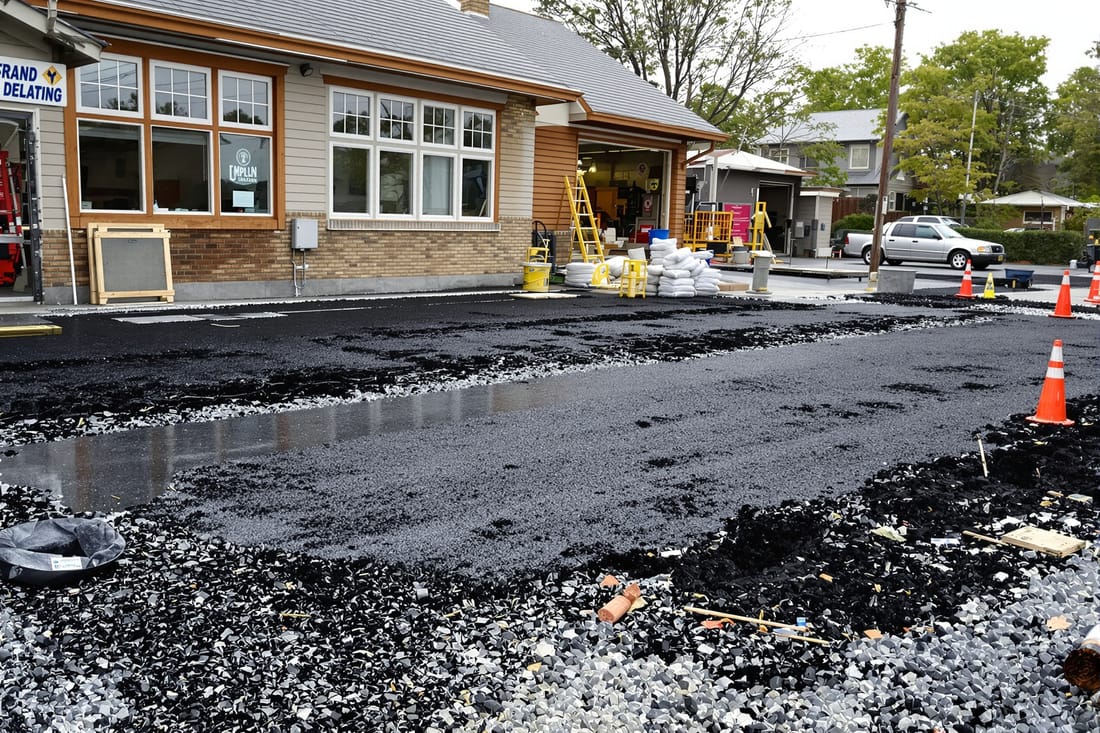
Next we install an appropriate stone base, usually a dense graded aggregate compacted in multiple lifts with vibratory rollers. Typical industrial sections use a thicker base than retail parking lots. In truck yards and loading areas, we often recommend 8 to 12 inches of compacted stone, adjusted for your soil conditions and traffic volumes. Good drainage is part of this stage. We shape the base for positive slope, install or adjust catch basins, and plan how surface water will leave the pavement without ponding.
The asphalt itself is typically placed in at least two lifts. For heavy duty areas we like to use a stronger base or binder course first, then a tighter surface mix that resists raveling and fuel drips. In some Greensboro truck courts or bus facilities, we may specify thicker total asphalt sections or polymer modified mixes that tolerate higher stress and temperature swings. Our crews use steel drum and pneumatic tire rollers to reach specified densities, which is what makes the pavement strong enough to handle industrial traffic.
We finish by addressing transitions and details that often cause problems if they are overlooked. That includes reinforcing areas in front of loading docks, filling utility cuts properly, tying into existing asphalt without a bump, and ensuring that trench patches are saw cut and compacted correctly. All markings, wheel stops, and safety striping are laid out with your operations team so that traffic flow and OSHA considerations are met.
What Drives Cost for Heavy Duty Asphalt Work in Greensboro
Industrial asphalt paving has more variables than a standard commercial lot, so understanding what drives cost will help you budget and compare proposals fairly. The largest factor is pavement thickness and structure. Heavier traffic and tighter turning areas require more stone base and thicker asphalt, which means more tonnage. We often separate pricing by zone, such as drive lanes, dock approaches, storage yards, and car parking, so you see exactly where the higher spec pavement is going.
Existing conditions are another big cost driver. If your current pavement is alligatored, severely rutted, or pumping water when trucks drive through, we know there is an underlying support problem. In Greensboro, that often means soft clay or poorly compacted fill. Correcting those issues can involve deeper excavation and additional base stone or stabilization, but it is what prevents new asphalt from failing in the same way a few years later. When we walk your site, we explain where we can mill and overlay and where full depth replacement is the smarter spend.
Access and phasing also affect cost. If we can pave large, open areas without frequent shutdowns or tight working windows, production is faster and more economical. When we must pave only overnight, work around sensitive operations, or constantly move crews to keep specific dock doors open, there is more labor and mobilization involved. We work with Greensboro facility managers to strike a balance between cost and disruption, sometimes combining several areas in one mobilization to keep unit prices down.
Material choices play a role as well. Heavier duty mixes or specialty binders cost more up front, but they can be a better value for areas that see steel tracked equipment, cranes, or constant heavy loading. During your estimate, Prestige Asphalt Greensboro will walk you through these options with plain numbers, so you know what you are paying for and why.
Common Industrial Pavement Problems and How We Prevent Them
Industrial asphalt surfaces are pushed far harder than typical parking lots, so it is important to design around the specific problems that show up in those environments. One frequent issue in Greensboro truck yards is rutting in wheel paths where loaded trailers sit or crawl. We address this by increasing structural thickness in those lanes and by making sure the base stone and asphalt layer compaction meet or exceed design densities. Proper slope also matters so water does not sit in those wheel paths and soften the structure.
Fuel and chemical exposure is another concern. Diesel and hydraulic fluids can soften asphalt over time. Around diesel pumps, refueling zones, and maintenance bays, we may recommend a thicker surface course, a different mix design, or even using concrete pads in the highest risk spots while surrounding them with heavy duty asphalt. This hybrid approach keeps costs controlled while protecting the areas most likely to be attacked by petroleum products.
Shear and shoving at loading docks is also common. Trucks backing, stopping, and turning tightly in the same location every day can push standard asphalt forward and create waves. To combat this, Prestige Asphalt Greensboro uses heavier duty mixes, increased thickness, and sometimes reinforcing in front of docks and compactor areas. We also shape grades so there is no unnecessary braking or spinning on steep short slopes right at the building.
In older Greensboro industrial parks, drainage is often an afterthought. Standing water leads to freeze thaw damage in winter and soft spots year round. On these projects, we spend time checking existing drain inlets, pipe sizes, and flow paths. Often, small adjustments like adding a catch basin where water regularly ponds, or regrading a low area of the base, can dramatically extend pavement life.
Planning Your Industrial Asphalt Project in Greensboro
Industrial asphalt paving has to be scheduled around production, weather, and local conditions. In Greensboro, the best window for major asphalt work typically runs from late spring through early fall, when temperatures stay warm enough for proper compaction and curing. We can and do pave outside that range, but heavy duty applications benefit from warmer weather because the thicker lifts stay workable longer and compact more uniformly.
Before we mobilize, we meet on site to map out phases, staging areas, and temporary traffic patterns. For a distribution center, that might mean re-routing inbound trucks, temporarily changing dock assignments, and planning alternate employee parking. For a manufacturing plant, it could involve coordinating with shutdowns or maintenance outages. Prestige Asphalt Greensboro provides a clear written schedule that your team can share internally, along with contact information for our onsite superintendent in case anything needs to adjust in real time.
Permits and inspections vary by jurisdiction, but in the Greensboro area we frequently coordinate with city or county staff when work touches public streets, driveway connections, or stormwater systems. We handle those conversations and schedule any required inspections so you are not stuck in the middle. If your facility has internal safety or contractor onboarding requirements, we also complete those in advance so there are no delays when the crew arrives.
After the pavement is installed, we review load restrictions, initial cure times, and maintenance expectations with you. For very heavy loading, we may recommend a short delay before allowing full traffic, especially for trucks turning sharply in hot weather. We also discuss crack sealing, sealcoating where appropriate, and routine inspections so small issues are caught early. Our goal is that your industrial asphalt paving project in Greensboro delivers full value over its entire design life, not just the first few years.